



What we do?
WE BUILD SYSTEMS FOR A SECTORS WHERE THERE IS NO ROOM FOR ERROR
In a world defined by precision and responsibility, Sinitech Industries exists to engineer control. We are a high-tech developer & manufacturer of advanced systems for the handling, dosing, and regulation of sensitive materials - where safety isn’t just a feature, but a foundation.
OUR TECHOLOGY DOESN'T FOLLOW STANDARDS. IT SETS THEM.
Technologies we offer:
EMX
EMX - Emulsion Explosives Production plant
Cartridge EMX (25 - 75mm)
Capacity: 5000 MT/year (2 shifts/day; 8hrs/shift)
Automatic cartridging line with polyethylene film
Cartridge water bath cooling line with transport conveyers
Optional: addition of Ammonium Nitrate and Aluminum powder for some formulations
Shelf life: >1 year - no crystallization in low temperatures exposure
Sensitation of matrix: with addition of glass micro-spheres or gassing agent
Repumpable Bulk Emulsion
Capacity: 10000 MT/year (2 shifts/day; 8hrs/shift)
Automatic line with truck loading system
Available booster:
- Pentolite (PETN/TNT)
- Compounds (RDX/TNT)
- Octol (HMX/TNT)
| Unit | Range | |
| Detonating Velocity | m/s | 4000-5000 |
| Density | Kg/m3 | 1100-1250 |
| Explosion temperature | C | 2200-3700 |
| Heat (constant volume) | MJ/kg | 3-5 |
| Specific energy | kJ/kg | 800-1100 |
| Specific pressure | atm/kg | 8500-11000 |
This process utilizes non-explosive raw materials and is free from environmental pollutants or substances harmful to human health.
Our process is designed with safety and sustainability in mind – no effluents (waste flows)
HMX
HMX - High Melting Explosive (Octogen & Hexogen) Production Plant
Plant consists of 2 individual systems that work independently:
- Synthesis of HMX (α-HMX)
- Crystallization of HMX (ß - HMX)
Synthesis of HMX (α-HMX)
Capacity: 100 kg /shift (12 hrs/shift) – batch process
Finished product: α -HMX with 20% moisture ready for packaging
Systems for solution preparation included:
- NAN preparation (Nitric Acid + Ammonium Nitrate)
- HEA preparation (Hexamine + Acetic Acid)
Purification step: RDX elimination with caustic soda
Hot filtration process of HMX
Fully automatic system with high automation and safety standards
Crystallization of HMX (ß-HMX)
Capacity: 100kg / 4hrs – continuous process
Finished product: ß – HMX of suitable grain size for preparation of shock tubes
Solution for crystallization process: DMSO (Dimethyl sulfoxide)
Fully automatic system with high automation and safety standards
Waste water treatment and Acid recovery
A comprehensive turnkey solution for managing the entire waste stream, delivering treatment that meets the highest environmental standards.
Recovery of DMSO and Acetic Acid
- Complete recovery solution with minimum mass losses <5%
- 24/7 automated system synchronized with production plant
PETN
PETN - Penthrite Production Plant
Capacity: 250 tons /year ( 1shift/day; 200 days/year)
Plant consists of 2 integrated systems operating in synchronization to ensure seamless functionality:
- Synthesis of PETN - Continuous nitration process of pentaerythritol (PE) with concentrated Nitric acid.
- Crystallization of PETN - Re-crystallization process obtaining uniform size and shape of the crystals suitable for Detonating Fused manufacturing.
Synthesis of PETN
Continuous nitration process of pentaerythritol (PE) with concentrated Nitric acid
Di-Penta (DPE) could be also used to improve the shape and grain size of crystals
Continuous centrifugal separation of PETN and spent acid
PE and DPE automatic dosing system
Nitric Acid automatic dosing system
Automatic transport to crystallization system
Crystallization of PETN
Re-crystallization process obtaining uniform size and shape of the crystals suitable for Detonating Fused manufacturing
Purification by Acetone
Vacuum filtration
Controlled cooling process - precision in grain size forming
| Unit | Range | |
| Melting point | C | 140 +-1 |
| Bulk Density | g/l | 850 +- 50 |
| Abel heat test | At 80 C | Pass |
| Impact Sensitivity | Non explosion at 35cm for 2kg | Yes |
| Grain size | Pass through 0,8 mm (%) Pass through 0,3 mm (%) Pass through 0,1 mm (%) |
Min 90 60 +-20 Max 25 |
| Acidity | % | Max 0,003 |
| Alkalinity | & | Max 0,005 |
TNT
TNT - Melting And Filling Production Plant
Automated TNT melting and filling plant for various bomb shells (Mortar, Artillery, Tank)
Capacity: Batch process 1000 – 2000 kg /day (2 shifts/day; 8hrs/shift)
Capacity customizable for end client use
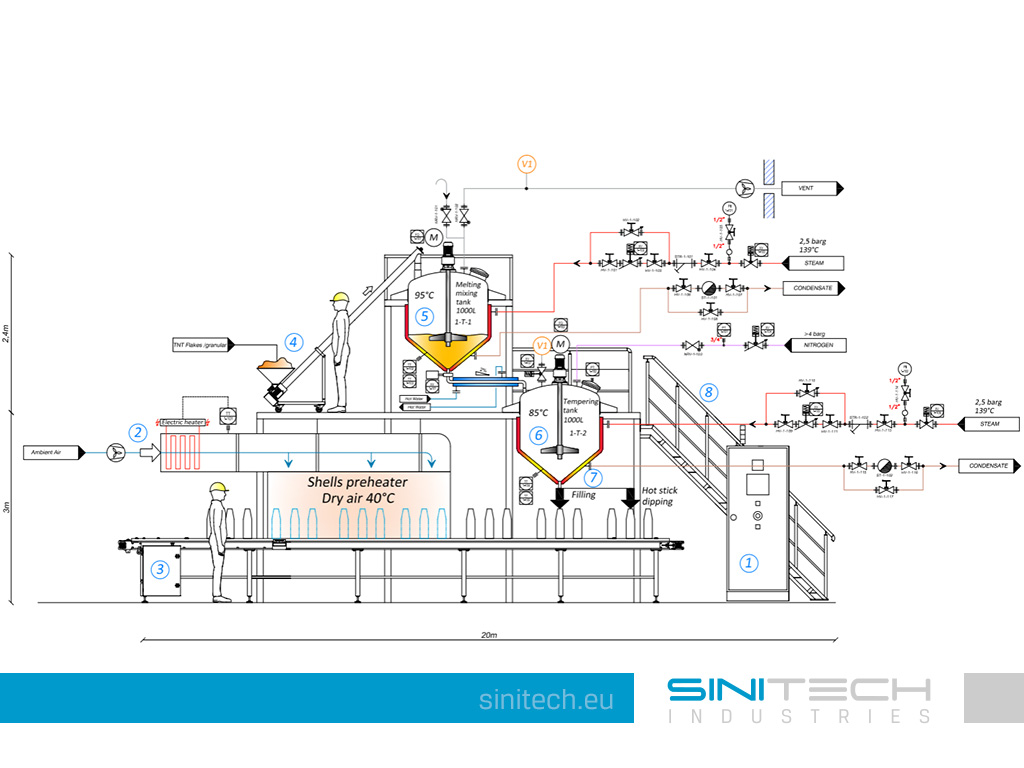
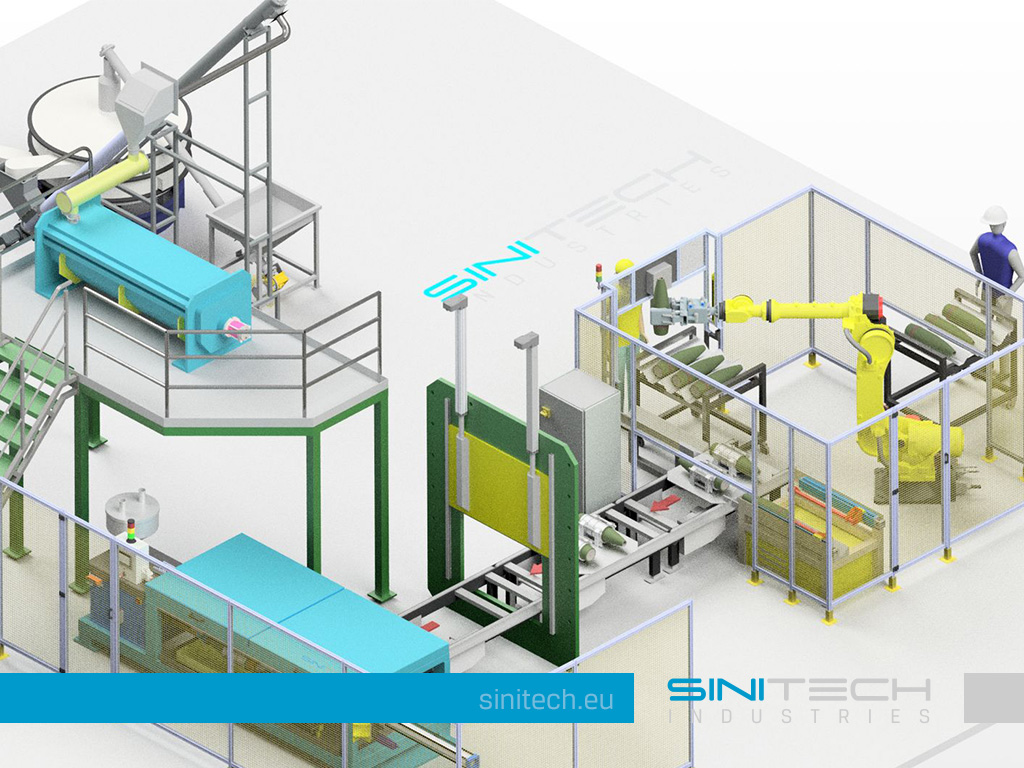
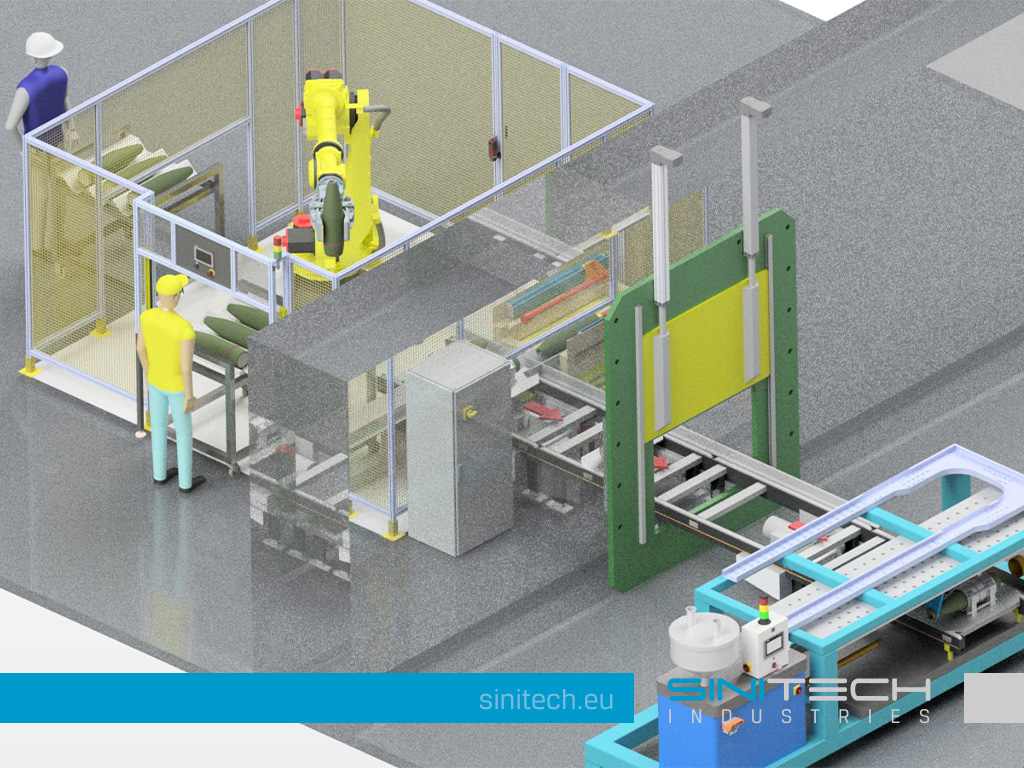
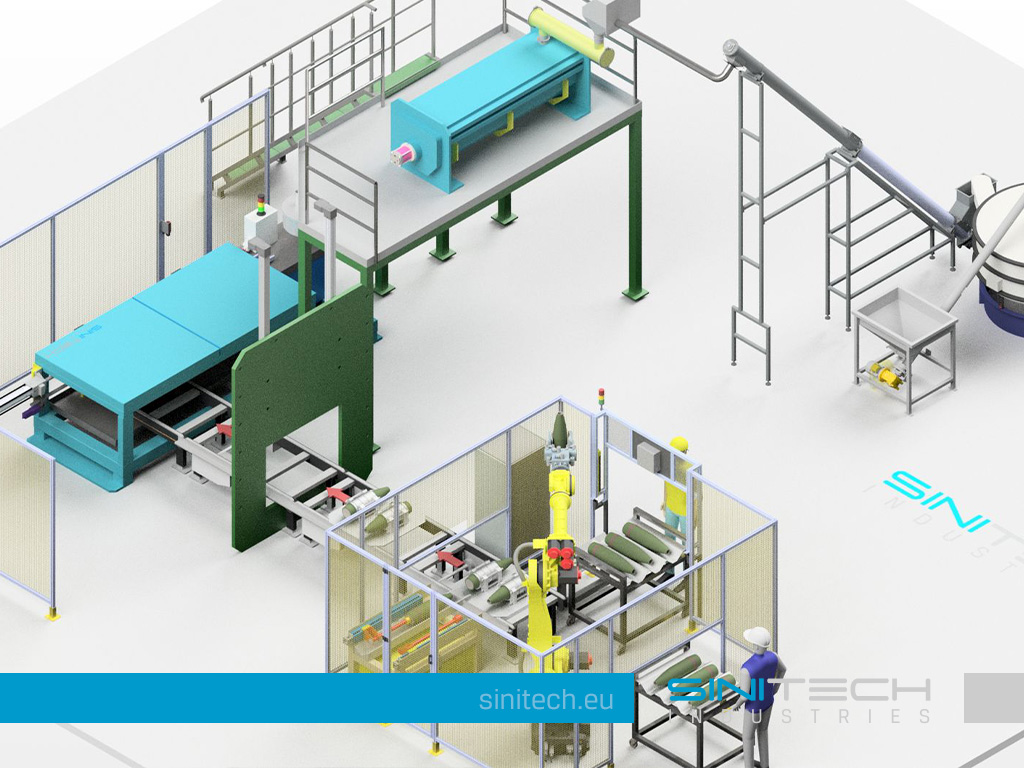
System is fully automatic, controlled via PLC panel. Loading of TNT flakes into conveyor system and placing shells on to a transport system is done manually by hand.
Empty shells transporting system in supported with warm dry air heating chamber.
Transporting system (conveyor) is automatic and adjustable to shell size
2 Jacketed and steam heated tanks equipped with stirrers : Melting and tempering of TNT
Two tanks are connected with double walled (water heated) pipeline with a slope of 2% to ensure, no residues or cured TNT is left. (complete drainability).
After transferring TNT to tempering tank, mixing tank is ready for another batch to melt. (semi-continuous system).
Tanks are equipped with ventilation exhaust and Nitrogen inertisation system.
(complete safety for operators)
Filling of shells in done by automated system – time of filing is controlled by microprocessor, ensuring accurate filling volume is achieved in every batch
Filling system supports 6 shells filling at once!
Curing of filled TNT is done by automated hot stick dipping system
Nitrocellulose
Energetic Nitrocellulose Production Plant
Key Highlights of the Production Process
- Annual throughput target: 5 000 t/year of energy-grade nitrocellulose, with room to scale up to 7 500 t/year
- Planned annual capacity: based on a 3-shift operation, 330 working days per year, totaling 7,920 operating hours annually (24/7 model)
- Core esterification step driven by three reactors (160–330 kg/h each), ensuring both capacity and expansion reserve
- Site layout dimensions: 400 x 250 meters (total area: 100,000 m²)
- Batch-based upstream/downstream balance: 1 000 kg batches, with 15 h in Stabilization I, 14 h in Stabilization II (100 % reserve)
- Refining and homogenization times set at 6 h and 20 h respectively, with full redundancy for process flexibility
- Key feedstocks: cellulose, nitric and sulfuric acids; auxiliary caustic soda and sulfur (for oleum), plus NaOH for wastewater pH control
Overview of the Process Units
WAREHOUSE MANAGEMENT
- Secure storage of incoming cellulose
- Buffering of finished nitrocellulose to match production and shipment schedules.
NITROCELLULOSE PRODUCTION
Core production unit - from cellulose preparation, esterification and stabilization through final parameter adjustment.
ACID TREATMENT
Manages all acid needs - storage of pure acids, preparation/circulation of esterification mixtures, and initial treatment of spent acid streams.
ACID RECYCLING
Optional recovery unit - concentrates spent nitric and sulfuric acids and produces oleum for full reuse in the nitrocellulose process.
UTILITIES TREATMENT
- Power distribution
- Water Management: Process-water supply & recycling
- Boiler Plant: Steam generation
WASTE TREATMENT
Process Water Treatment: Removal of acids, solids, and organics from process effluents.
Solid Rocket Propellant
Solid Rocket Propellant Production Facility
Production of ammonium perchlorate-based solid rocket propellants. The facility consists of two independent systems operating separately:
- Ammonium perchlorate production
- Rocket propellant manufacturing
Ammonium Perchlorate Production
- Production capacity: 3 tons/day
- Ultra-high purity (< 10 ppm metals, free of Na⁺/Cl⁻) – critical for rocket motor stability and burn-rate performance
- Compliant with MIL-DTL-192C (Grade A, Grade B) / propellant-grade AP (marketable quality)
- Granulation: 150 µm
- Powder moisture content: < 1%
- Designed for scalable production capacity based on demand
- Complete waste stream treatment – sodium chloride crystallization up to 99% purity (NaCl as by-product – potential for market sale)
Rocket Propellant Manufacturing
- Production capacity: 450 tons/year
- Milling of raw ammonium perchlorate to high-density granulation of 50 µm
- Casting into molds or directly into rocket motor bodies
- Production of solid propellant sheets (rolled strips) in custom lengths and diameters according to client specifications
- Automated system for dosing aluminum powder and additives
- Automated controlled tempering (curing) system – eliminates casting defects
- Quality control system including thrust testing of the manufactured rocket motor
Projectile Loading
- Capacity: Batch process of 1,000–2,000 kg/day (2 shifts/day; 8 hours/shift)
- Automated casting-based filling system with controlled curing (cooling) process
- Quality control of finished product using non-destructive testing (NDT) – Radiographic Testing (RT) method
Storage
- Material storage units: 4 x 50-ton capacity
Safety & Compliance
SAFETY ISN'T AN OUTCOME. IT’S OUR CULTURE.
Everything we make is built to exceed the world’s most demanding safety and legal frameworks. We work only with licensed partners. Every solution is certified, documented, and verified - not as a formality, but as a principle.
WHEN THE RISKS ARE ABSOLUTE, RELIABILITY MUST BE UNCOMPROMISING
Our Responsibility
TECHNOLOGY IS ONLY AS POWERFUL AS THE VALUES BEHIND IT.
We invest in people, not just products - in knowledge, not just capacity.
From community engagement and technical education to academic partnerships, we see engineering as a social contract, not just a commercial one.
RESPONSIBILITY ISN'T AN ADD-ON. IT'S OUR IDENTITY